+86 198 0337 5938
+86 198 0337 5938
Aug. 26, 2026
Launching the first private label makeup brush order requires months of decisions.
You select the fibers, adjust the brush head, approve the handle color, confirm the ferrule, revise the logo and finally sign off on the packaging.
Then six months later, the product sells well and you reorder.
At that point, the objective changes.
You are no longer asking:
“Can we create this brush?”
You are asking:
“Can we reproduce the same brush again?”
That is a different manufacturing challenge.
For established beauty brands, repeat-order consistency can become just as important as new-product development.
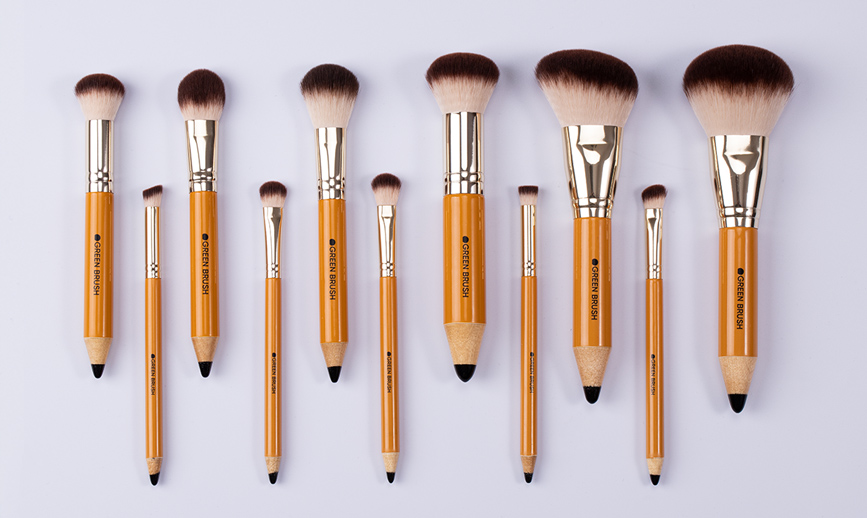
Once a product has entered the market successfully, its specifications should stop being treated as a flexible design concept.
They become the commercial product standard.
Green Brush's existing OEM development guidance already describes the approved final sample as the production standard, with materials, processes, dimensions and structure locked before bulk production.
For repeat orders, the important next step is preserving that standard.
The reference should include more than one physical brush.
Keep a complete product file containing:
product code + approved sample + material specification + dimensions + colors + artwork + packaging version.
If one of these elements changes, the brand should be able to identify exactly what changed.
Suppose your original product used a specific synthetic fiber.
A later batch may still be described as “PBT synthetic fiber,” but that does not automatically mean every characteristic is identical.
Fiber thickness, softness, taper, elasticity, color and other parameters can influence how the finished brush behaves.
Green Brush itself notes that PBT fibers are available in different thicknesses and offers multiple hair materials with different performance characteristics.
The same principle applies to other components.
“Aluminum ferrule” identifies a broad material category.
It does not fully define:
Shape
Thickness
Plating
Surface appearance
Crimping
Dimensions
A repeat-order specification therefore needs more detail than a product name.
Some changes are more commercially important than others.
For makeup brushes, pay particular attention to anything that changes the way the product feels or applies makeup.
Keep clear records of:
Fiber type
Color
Length
Brush-head density
Finished head dimensions
Firmness target
A fiber substitution can be visually subtle while noticeably changing product pickup or blending.
Head width, length, density and shape should remain aligned with the approved product.
A foundation brush that becomes slightly less dense can behave differently even if the handle and packaging remain unchanged.
Record material, dimensions, color and surface finish.
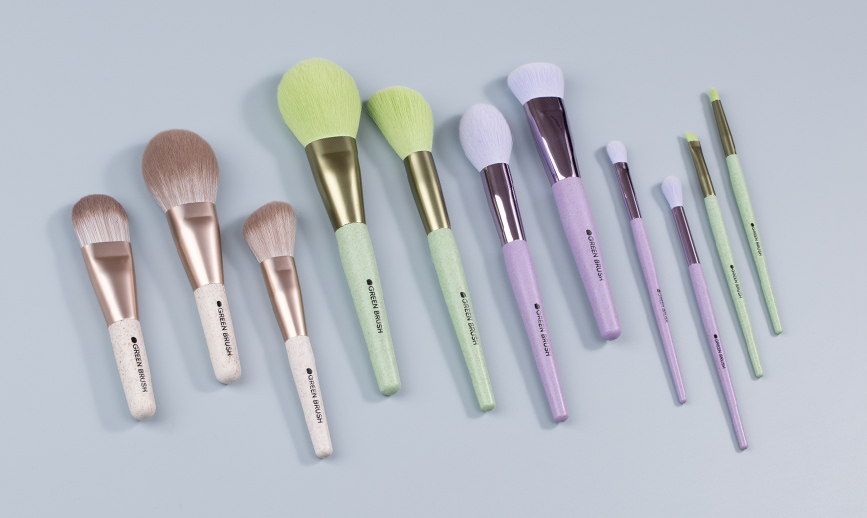
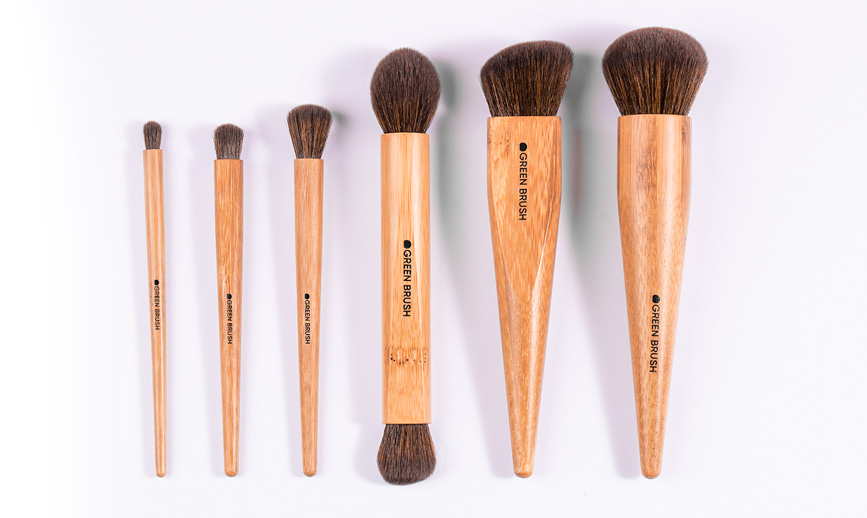
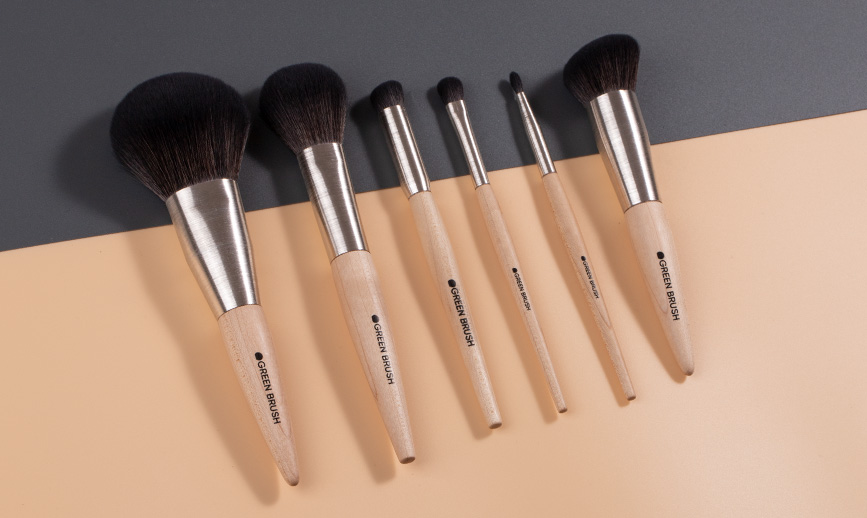
Green Brush's current customization system uses materials ranging from birch and bamboo to aluminum and plastic, with custom colors and forms available.
Changing the substrate or coating can affect appearance even if the same color reference is used.
Pantone codes are useful, but they are not the entire color-control system.
A single nominal color can appear different on painted wood, plastic and plated metal.
For a long-running brush collection, keep an approved physical color reference together with the digital specification.
This is particularly useful when:
A reorder is placed many months later
A new packaging batch is printed
A handle coating changes
Several brush SKUs need to match
A limited edition uses a close variation of the core color
Compare the repeat-order sample with the approved physical product rather than relying only on a screen.
A manufacturer may occasionally need to propose a change.
A component may become unavailable, a packaging material may be discontinued, or a process may need adjustment.
The issue is not that change can never happen.
The issue is unapproved change.
For an established SKU, a simple rule is useful:
If a material, dimension, finish or process differs from the approved specification, review it before mass production.
The manufacturer can then provide an updated sample or component for approval.
This gives the brand an opportunity to assess whether the change affects:
Appearance
Application performance
Durability
Packaging
Cost
Regulatory or sustainability claims
Packaging and logo files often create more reorder problems than expected.
A brand may change a barcode, address, ingredient-related text on a cosmetic pairing, recycling icon, language or product description between orders.
If several artwork files circulate by email, the factory can easily receive an outdated version.
Use clear version control.
For example:
Brush Set Box – V3 – Approved – 2026-06-15
is more useful than:
final_box_new_latest.ai
The same principle applies to:
Handle logo artwork
Carton marks
Inserts
Instruction cards
Labels
Barcodes
Keep one approved production folder for each SKU.
A full redevelopment is not required for every reorder.
If the same materials, process and artwork are being reproduced shortly after the previous order, the established production reference may be sufficient according to the agreed supplier process.
However, another pre-production confirmation becomes more useful when:
A material has changed
A long time has passed
Color has been modified
Packaging has changed
Tooling has been repaired or replaced
Production is moving to another component source
The brand has updated specifications
The greater the change, the stronger the case for reapproval before the complete batch is produced.
Quality inspection for a reorder should not ask only:
“Is this brush acceptable?”
It should also ask:
“Is this brush consistent with the product already in the market?”
That changes the inspection mindset.
Compare repeat-order samples with the approved reference for:
Head shape
Density
Softness and firmness
Handle dimensions
Color
Ferrule finish
Logo position
Packaging
Green Brush already emphasizes quality consistency as an important requirement for brands and large-scale orders.
For a successful repeat-order program, that consistency should be evaluated against a defined historical reference.
Brands often want to “improve” a product during a reorder.
Perhaps the team wants softer hair, a heavier handle or a slightly larger brush head.
That can be a valid product decision—but it should be treated as a revision.
If customers already know and like the existing version, an unnoticed performance change can create unexpected feedback.
When a meaningful change is intentional, consider creating:
Version 2 / revised specification / new SKU
rather than quietly changing the existing product.
This keeps product history clear for both the brand and manufacturer.
Repeat orders provide useful information that first-time development cannot.
You now know:
Which SKUs sell fastest
Which brush types reorder most often
Which packaging performs well
Which finishes are easier to maintain consistently
Which components generate the most quality questions
Use that information when planning the next collection.
For example, if three successful face brushes share the same handle design, using that architecture for new SKUs may simplify future development.
If a complicated decorative finish creates repeated production difficulty without improving sales, the next range can use a more stable alternative.
The repeat-order stage is therefore not only about reproducing products—it is also a source of product-development data.
Before placing the next order, send one controlled information package.
It can contain:
SKU number
Quantity
Approved product specification
Reference to the approved physical sample
Current artwork files
Packaging version
Any authorized changes
Requested delivery timing
Do not make the supplier reconstruct the product specification from old email conversations.
A clean reorder file makes communication faster and reduces ambiguity.
A small first order is primarily a product-development project.
A successful fifth or tenth order is a supply-chain project.
Your customers expect the brush they reorder to feel like the brush they already know.
That makes documentation, component control, approved references and change management increasingly important as volume grows.
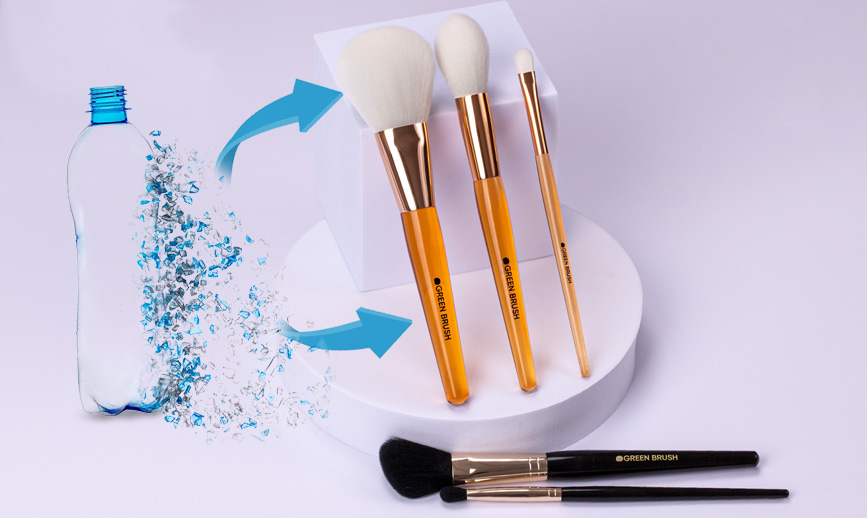
Green Brush supports both customized and larger-scale private label brush production across face brushes, eye brushes, brush sets and other categories, while its custom solution covers the key components that need to remain controlled from one production cycle to the next.
The first order proves that a product can be made.
A reliable repeat-order system proves that the product can become a lasting part of your brand.
Previous: None
Next: When Does a Custom Makeup Brush Need New Tooling or a Custom Mold?
Leave a Message