+86 198 0337 5938
+86 198 0337 5938
Aug. 17, 2026
When a beauty brand asks for a custom makeup brush, “custom” can mean very different things.
One project may only require a new handle color, logo and packaging. Another may involve an entirely new handle profile, an unusual ferrule, or a brush structure that does not exist in the manufacturer's current component library.
The first project can often move into sampling quickly. The second may require custom tooling or a new mold before a production-ready sample can be made.
Understanding this difference early helps beauty brands make better decisions about development cost, launch timing and order volume.
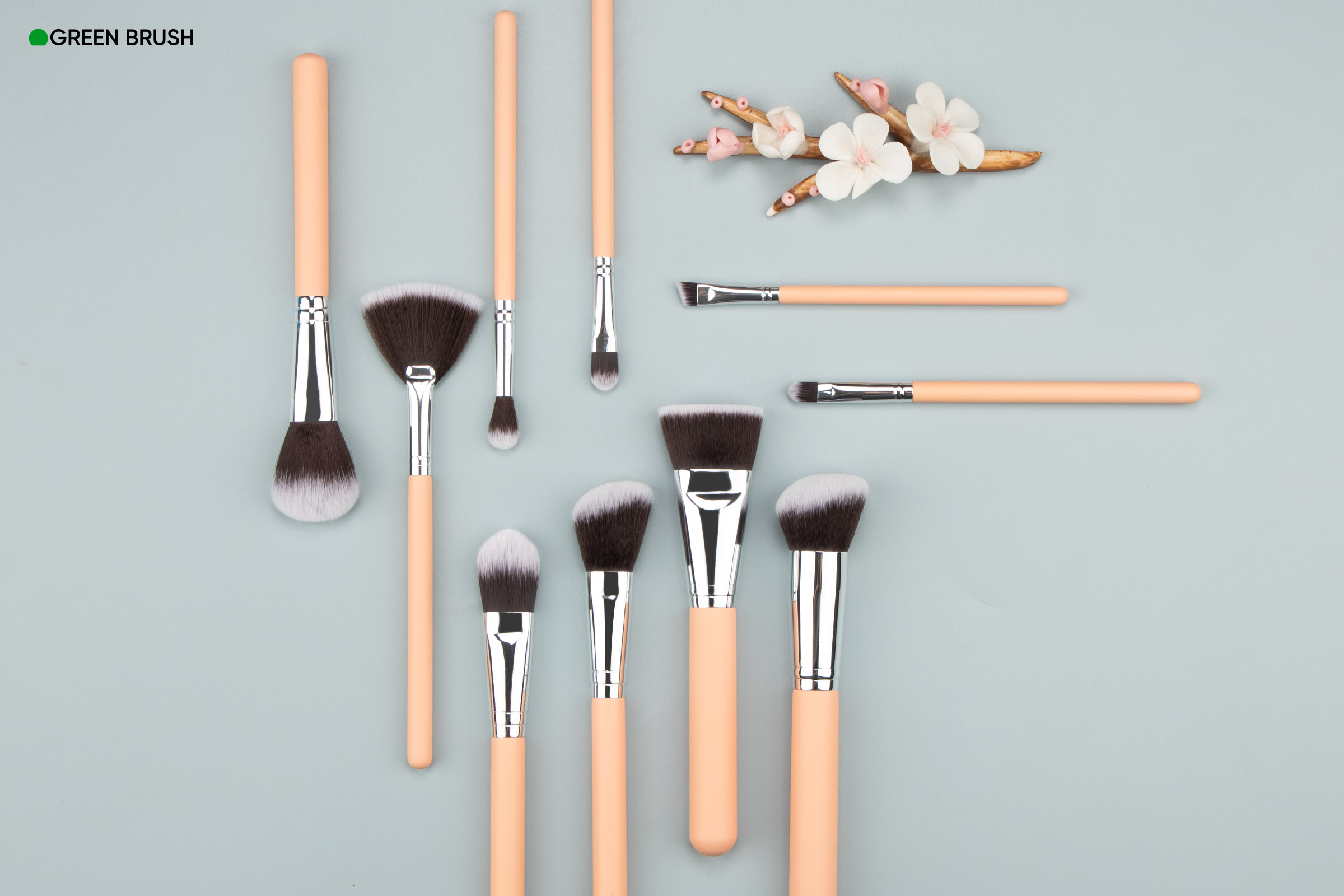
A private label makeup brush can be highly customized without creating every component from zero.
Many projects begin with an existing brush structure and then change selected elements such as:
Bristle material or color
Brush-head dimensions
Handle color
Ferrule plating
Logo
Surface finish
Packaging
This approach is often suitable when your priority is developing a distinctive branded collection rather than creating a completely new physical structure.
Green Brush already supports customization across brush hair, shape and size, ferrule, handle, logo and packaging. Its existing makeup brush range therefore gives brands a useful starting point before deciding whether a completely new component is necessary.
Tooling becomes more relevant when the requested design changes the physical geometry of a component rather than only its decoration.
Changing a wooden handle from black to a custom Pantone color is very different from creating a new three-dimensional handle profile.
A brand may want:
An asymmetric grip
A proprietary geometric shape
A wider ergonomic section
A sculpted decorative end
A distinctive plastic profile
A handle that visually connects several brushes in one collection
If the required shape cannot be produced with an existing manufacturing setup, additional tooling may be needed.
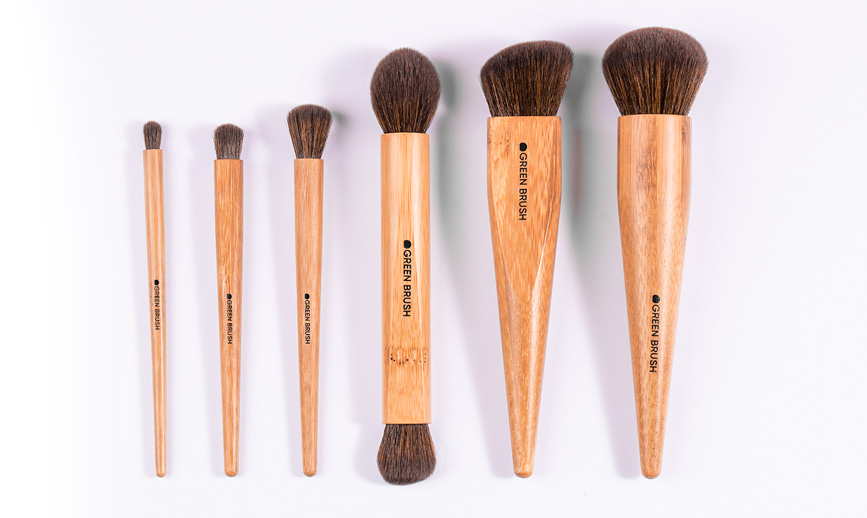
Green Brush states that brush handles can be developed in exclusive shapes and that plastic handles can be customized into different grip forms.
Most conventional makeup brushes use familiar round, oval or flattened ferrule structures.
However, unusual brush-head designs may require a ferrule that holds the fibers in a different geometry.
Green Brush specifically notes that special ferrule shapes can be created through molding for unique hair shapes.
This becomes particularly relevant when a brand wants the brush itself—not merely its color—to be visually recognizable.
If the design includes molded plastic parts, caps, decorative components or special grip structures, a new component may require dedicated tooling.
This should be identified during the engineering stage rather than after artwork and packaging have already been finalized.
Brands sometimes assume that every visual change requires new tooling.
That is usually unnecessary.
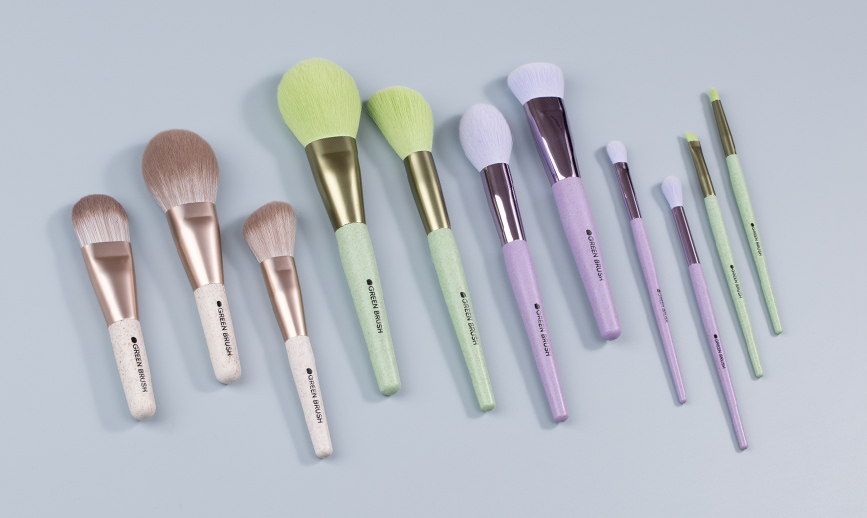
For example, using an existing handle structure while changing its Pantone color, adding silkscreen branding, changing ferrule plating or selecting another available bristle can produce a substantially different product without creating a completely new structural component.
Green Brush currently provides multiple handle materials, ferrule finishes and logo processes including screen printing, hot stamping and laser engraving.
This gives brands two different development strategies:
Customize an existing structure when speed, lower development risk and commercial testing matter most.
Develop proprietary tooling when physical differentiation is central to the product concept.
Neither approach is automatically better.
Before approving tooling, ask one question:
What does this new geometry add to the product?
A custom shape can make sense when it provides:
Better ergonomics
A recognizable signature design
A functional advantage
A unique retail presentation
Stronger consistency across a hero collection
It makes less sense when the difference is so small that consumers are unlikely to notice it.
For example, developing an entirely new handle mold simply to make an existing cylindrical handle slightly wider may add development work without creating meaningful differentiation.
By contrast, an exclusive handle that becomes a recognizable feature across several brush SKUs may justify the investment more easily.
Tooling decisions should be made at collection level, not only at individual brush level.
Suppose you are developing an eight-piece brush set.
If every SKU uses a different custom handle structure, the project may become unnecessarily complicated.
A more efficient approach may be to create a small family of compatible components:
one handle design for face brushes + one smaller version for eye brushes + consistent ferrule and finish language.
This still gives the collection a recognizable identity while reducing unnecessary development complexity.
Shared components can also simplify later additions to the range.
When a new blush brush or eye brush is introduced, the brand already has an established design system to work from.
When evaluating a custom mold or tooling quotation, do not look only at the upfront tooling charge.
Ask how the decision affects:
Prototype timing
Sample revisions
Production lead time
Minimum production quantity
Component cost
Future repeat orders
Design changes
Replacement tooling
Additional SKUs
Green Brush notes that custom samples are normally offered without charge, but projects involving additional costs such as molding or machine startup can be treated differently.
That distinction should be clarified before development begins.
For a proprietary component, your development team should understand what is actually being created.
Useful questions include:
What component requires new tooling?
Handle, ferrule, plastic part, packaging insert or another element?
Why can an existing component not be used?
Ask the manufacturer to explain the structural difference.
How many revisions are included?
A drawing may look correct while the physical sample reveals ergonomic or assembly issues.
Can the tooling be reused for future SKUs or repeat orders?
This matters when the design is intended to become part of a long-term collection.
What happens if the design changes after tooling is made?
Small changes may be possible; larger dimensional changes may require modification or replacement.
Does tooling affect the MOQ or production lead time?
These questions prevent the mold from becoming an isolated cost that the product team has not planned around.
If a new mold is required, work in the correct order.
First approve:
shape → dimensions → grip → balance → assembly
Then finalize:
color → coating → logo → decorative finish
There is little value in perfecting a metallic finish on a handle that still feels uncomfortable in use.
The same applies to special ferrules.
Before finalizing plating, confirm that the ferrule holds the intended brush-head geometry correctly and that the complete brush remains balanced.
A handle sample should not be approved only as an isolated handle.
The complete assembled brush can behave differently.
A larger handle may change weight distribution. A special ferrule may change the apparent size of the brush head. A decorative component may affect packaging dimensions.
Once the structural prototype is available, evaluate:
Grip and balance
Brush application
Connection between components
Total weight
Visual proportion
Packaging fit
Custom tooling should improve the finished product, not simply produce an unusual standalone component.
New tooling is not necessary for every brand launch.
Existing structures are often more suitable when you are:
Testing a new market
Launching your first brush collection
Working with a shorter development schedule
Producing a limited edition
Unsure which brush styles will become repeat sellers
You can still differentiate the collection through fiber selection, brush-head configuration, colors, ferrule finishes, logos and bespoke packaging.
Once sales data identifies the strongest SKUs, a future generation of the collection can introduce more proprietary structures.
A new mold becomes more commercially logical when the component contributes to long-term brand recognition.
This may apply to:
A signature foundation brush
A proprietary kabuki design
A distinctive handle system used across several SKUs
An unusual brush-head and ferrule structure
A premium collection designed for repeated production
In these cases, the new component becomes part of the product platform rather than a one-time decoration.
If your project may require a custom mold, provide more than an inspiration image.
Useful information includes:
Product function
Approximate dimensions
Reference product or sketch
Preferred materials
Target weight
Brush-head requirements
Handle geometry
Target price position
Expected quantity
Number of SKUs
Planned launch date
The manufacturer can then determine which elements can use established structures and which genuinely require new development.
Green Brush's custom makeup brush service supports component-level customization across brush heads, ferrules, handles, branding and packaging, including special molded ferrule structures and exclusive handle designs.
The goal of private label development is not to customize the maximum number of components.
It is to customize the right components.
For some brands, an existing brush structure with distinctive fibers, colors and packaging provides enough differentiation.
For others, a proprietary handle or ferrule becomes an important part of product identity.
Understanding when custom tooling adds real value—and when it simply adds complexity—helps you develop a brush collection that is easier to launch, reproduce and expand over time.
Previous: None
Next: How Many Eye Brushes Should Your Private Label Collection Include?
Leave a Message