How Many Eye Brushes Should Your Private Label Collection Include?
Jul. 22, 2026
Share:
A larger eye brush collection does not automatically create more value. When several brushes have nearly identical head shapes and application functions, customers may struggle to understand the difference, retailers may hesitate to stock the full range, and brands may carry unnecessary inventory across too many SKUs.
The better approach is to build the collection around distinct makeup tasks. Each brush should solve a recognizable application need, support the formulas in your cosmetics range, and occupy a clear position within the product assortment.
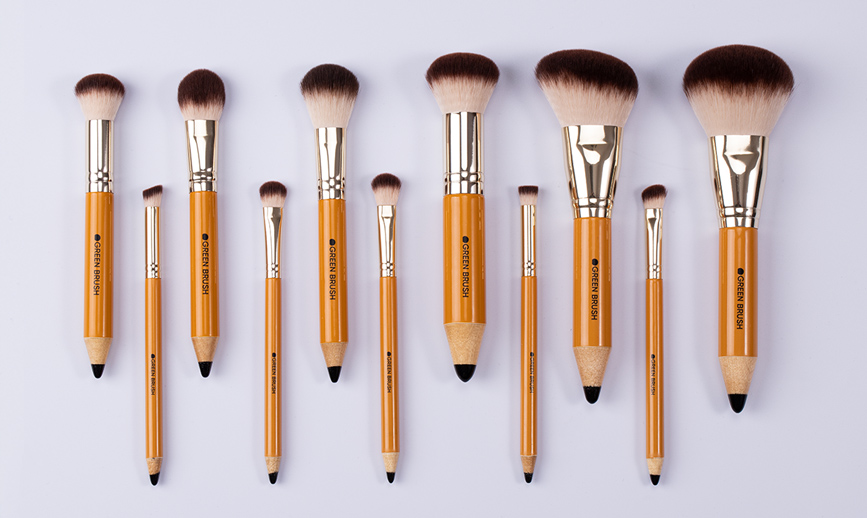
Green Brush offers eye brush formats for eyeshadow placement, blending, shading, crease work, eyeliner application and brow definition, with additional variations such as precision, angled, pencil, smudge, round and tapered designs. This allows brands to build either a concise everyday collection or a more specialized professional range.
Start with the Customer’s Eye Makeup Routine
Do not begin by selecting every attractive brush shape in a manufacturer’s catalog. Begin by mapping the steps your target customer performs.
A typical eye makeup routine can include:
Applying a base shade
Packing color onto the eyelid
Defining the crease
Blending transitions
Adding detail to the outer or inner corner
Smudging color around the lash line
Applying eyeliner
Filling and grooming the brows
Your collection does not necessarily need a separate brush for every step. Some brushes can perform two related functions, particularly in compact consumer sets. Professional collections, however, can justify more specialized tools when each model offers a noticeable difference in placement, pressure or precision.
The right number of brushes therefore depends less on how many models are available and more on how many distinct application problems the range needs to solve.
A Four-Piece Essential Eye Brush Set
A four-piece set is suitable for entry-level collections, travel kits, promotional programs and brands that want to introduce eye tools without creating a large initial assortment.
A practical four-piece set can include:
Brush
Main Role
Secondary Role
Flat shader brush
Packs eyeshadow onto the eyelid
Applies cream shadow or shimmer
Tapered blending brush
Softens edges and transitions
Adds diffused crease color
Small angled brush
Applies eyeliner or brow product
Defines the lash line
Pencil or precision brush
Adds detail to small areas
Smudges shadow under the eye
This structure covers placement, blending, lining and detail work without giving the customer several brushes that appear to do the same thing.
A four-piece range works particularly well when:
Your customer is new to eye makeup
The brushes will accompany an eyeshadow palette
Retail shelf space is limited
You are testing a new beauty tool category
The set must fit compact packaging
The target price does not support a larger collection
The main limitation is that one brush may need to perform more than one task. For example, the angled brush may be marketed for both eyeliner and brows. This is acceptable when the collection is intentionally positioned as simple and multifunctional.
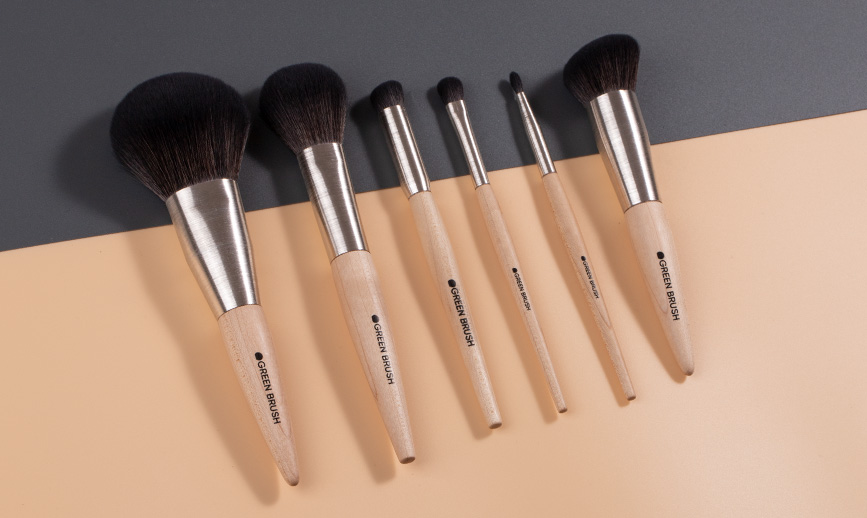
A Six-Piece Everyday Collection
Six brushes provide enough specialization for a more complete eye makeup routine without becoming difficult for general consumers to understand.
A balanced six-piece collection may include:
Large eyeshadow brush
Flat shader brush
Standard blending brush
Precision crease brush
Pencil or smudge brush
Angled eyeliner and brow brush
This format separates broad color application from concentrated pigment placement. It also gives the user both a general blending brush and a smaller brush for controlled crease work.
The six-piece structure is suitable for:
Established cosmetic brands
Mid-market brush collections
Everyday eye makeup sets
Gift boxes
E-commerce bundles
Products paired with multi-shade palettes
Unlike a four-piece set, the six-piece collection can support both simple daytime looks and more detailed evening makeup. However, the differences between the eyeshadow, shader and crease brushes must be visible enough for customers to understand.
For example:
The eyeshadow brush should be wider and more flexible.
The shader should be flatter and denser.
The crease brush should be narrower or more tapered.
The blending brush should have longer, softer fibers.
Changing only the product name while keeping nearly identical head dimensions will create unnecessary overlap.
An Eight- to Twelve-Piece Professional Eye Brush Range
Professional makeup artists and advanced users often require more control over placement, blending and detail. An extended collection can therefore include several variations within the same broad category.
Possible additions include:
Large eyeshadow brush
Standard eyeshadow brush
Precision eyeshadow brush
Flat shader brush
Angled shader brush
Standard blending brush
Precision blending brush
Tapered crease brush
Pencil brush
Smudge brush
Fine eyeliner brush
Angled brow brush
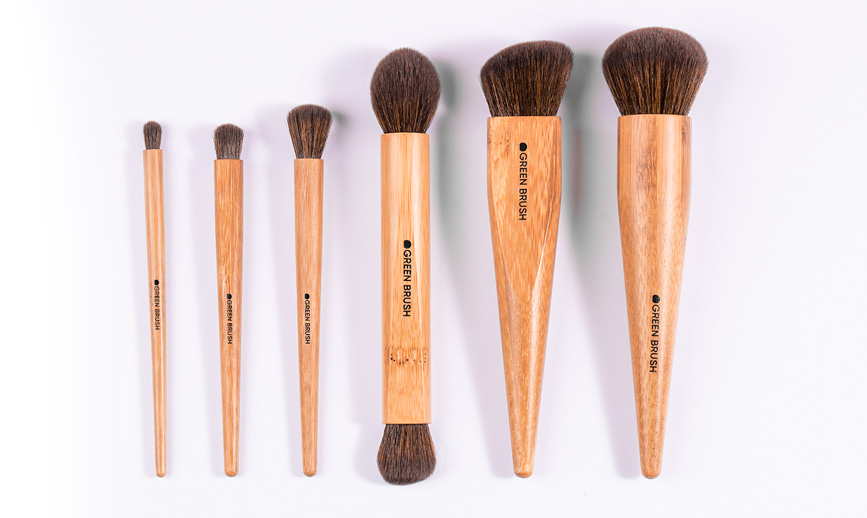
Green Brush currently presents multiple head variations within its eye brush category, including large, precision, angled and slanted eyeshadow brushes; standard and precision pencil brushes; a smudge brush; and several blending profiles.
An extended collection is justified when the differences affect real application performance. For example:
A large blending brush creates a broad, diffused transition.
A precision blending brush works within a smaller crease area.
A pencil brush places concentrated color.
A smudge brush creates a softer, wider lash-line effect.
A fine liner brush creates narrow lines.
An angled brush is more suitable for brows or winged application.
The range should not simply contain several brushes differentiated by a few millimeters unless those differences are meaningful to the intended user.
Consider a Hero-Brush Strategy Instead of a Full Set
Not every cosmetic brand needs to launch an eye brush set.
A single hero product can be more effective when the brand has one strong formula or one recognizable makeup technique. Examples include:
A precision brush designed for a cream eyeshadow pot
A dense shader developed for metallic pigments
A fine angled brush paired with brow pomade
A compact blending brush for hooded eyes
A dual-ended brush included with an eyeshadow palette
A smudge brush developed for smoky eyeliner
This strategy reduces the number of initial SKUs and makes the product story easier to communicate. It can also help the brand test customer demand before expanding into a complete private label eye brush collection.
A hero brush should have a clear connection to the cosmetic formula. The product page, packaging and marketing content should explain exactly why that shape was selected and how it improves application.
Build the Range Around Formula Types
The brushes should reflect the formulas your brand already sells or plans to launch.
Powder Eyeshadow Collections
Powder-based ranges commonly need:
A flat brush for placing color
A soft brush for blending
A tapered brush for the crease
A pencil or smudge brush for detail
A powder-focused brand can justify several blending and crease shapes because different head sizes create different levels of diffusion and control.
Cream and Liquid Eye Products
Cream and liquid formulas generally require smoother, more controlled application. The collection may prioritize:
Dense synthetic shader brushes
Flat precision brushes
Angled detail brushes
Fine eyeliner brushes
A large fluffy brush may be less relevant unless the brand also sells powder products.
Gel Eyeliner and Brow Products
A brand focused on gel liner, brow pomade or cream color may build a smaller specialist range around:
Fine liner brush
Angled liner brush
Flat lash-line brush
Angled brow brush
Spoolie or dual-ended brow tool
Multi-Formula Palettes
A palette containing matte, shimmer and cream shades may require a broader brush system. The set can include one tool for packing pigment, one for blending matte shades and one for detailed or damp application.
Green Brush states that synthetic fiber options can be developed for powder, cream, gel and liquid formulas, while brush shape, density, bristle length and ferrule size can be customized according to the intended application.
Avoid Redundant Brush Functions
Redundancy is one of the most common problems in eye brush assortment planning.
Before approving a new model, compare it with every brush already selected.
Ask:
Does it perform a different task?
Does it serve a different formula?
Does it provide a noticeably different level of control?
Is it designed for a different eye area?
Can the customer understand the distinction immediately?
Would removing it leave an important gap?
A functional matrix can help identify overlap.
Function
Large Shader
Precision Shader
Blending
Pencil
Angled Brush
Broad lid coverage
High
Low
Medium
Low
Low
Concentrated color placement
Medium
High
Low
High
Medium
Diffused blending
Low
Low
High
Medium
Low
Lash-line work
Low
Medium
Low
High
High
Eyeliner application
Low
Low
Low
Medium
High
Brow definition
Low
Low
Low
Low
High
Two brushes can share a secondary function, but they should not have identical primary roles.
Consider Eye Shape and Application Area
A collection designed only around makeup technique can overlook differences in eye size and lid space.
Larger brush heads can be efficient for broad application but may feel difficult to control on:
Small eyelids
Hooded eyes
Deep-set eyes
Narrow crease areas
Detailed lower-lash application
Precision and tapered brushes can help brands address these users without changing the entire product range.
A mainstream collection can include one standard blending brush and one smaller precision brush. The distinction is easy to explain:
Standard blending brush for broad transitions
Precision blending brush for controlled crease and outer-corner work
This is more useful than including three similar large blending brushes with only minor profile changes.
Decide Whether Brushes Will Be Sold Individually or as a Set
The sales format changes how the collection should be structured.
Individual Retail Brushes
Each brush needs:
A distinct name
A clear application purpose
Standalone packaging
Product-specific instructions
A price that makes sense on its own
The range can be expanded gradually because customers select only the brushes they need.
Complete Eye Brush Sets
A set should cover a complete routine without obvious duplication. Packaging should help customers identify each brush and understand the sequence of use.
Sets can also be structured by customer level:
Essential Eye Set
Everyday Eye Set
Precision Eye Set
Smoky Eye Set
Eyeliner and Brow Set
Professional Eye Collection
Brushes Paired with Cosmetic Products
When a brush is included with a palette, eyeliner or brow product, it should be selected specifically for that formula. The brush does not need to cover an entire routine.
The dimensions must also be coordinated with the palette tray, carton or product case.
Use Product Architecture to Control Price
The number of brushes affects more than the retail price of a set. Every additional SKU can introduce separate requirements for:
Brush-head specifications
Sampling
Quality inspection
Packaging artwork
Inventory management
Product photography
Retail listings
Reordering
Forecasting
Brands should therefore decide which models will be permanent core products and which are better reserved for seasonal sets or limited collections.
A practical product architecture may include:
Core Range
Four to six essential brushes that remain available throughout the year.
Specialist Range
Precision, smudge, liner and advanced blending brushes sold individually.
Seasonal Range
Limited colors, decorative handles, gift sets or collaboration packaging.
This structure gives the brand variety without requiring every model to carry the same inventory commitment.
Choose Between Existing Brush Platforms and Fully Custom Shapes
A brand does not always need to develop every brush head from the beginning.
An existing brush platform can be customized through:
Fiber type
Bristle color
Handle material
Handle color
Ferrule finish
Logo treatment
Packaging
This route can be suitable when the priority is branding, market testing or a shorter development cycle.
A more extensively customized structure may be justified when:
The brush accompanies a proprietary formula
Existing shapes do not provide the required result
The brand needs a recognizable hero design
Handle ergonomics are central to the product concept
A dual-ended or compact format is required
The collection occupies a premium market position
A private label eye brush manufacturer should help distinguish between aesthetic customization and changes that affect application performance.
Test the Brushes as a Collection
Each brush should be assessed individually, but the range must also work as a coordinated system.
During sampling, evaluate:
Whether every stage of the intended routine is covered
Whether two brushes produce nearly identical results
Whether brush sizes progress logically
Whether the handle proportions are consistent
Whether the collection feels balanced in the hand
Whether the brushes fit the intended case or packaging
Whether users can distinguish the models without reading the labels
Testing the collection with an actual eyeshadow palette, liner or brow formula provides more useful feedback than reviewing the brushes only by appearance.
A visually consistent range can still be commercially weak when the functions are unclear.
Information to Give Your Manufacturer
A useful development brief should include:
Target customer
Customer skill level
Cosmetic formulas
Brushes sold individually or as a set
Essential application tasks
Number of planned SKUs
Target retail price
Preferred fiber direction
Handle and ferrule concept
Logo method
Packaging format
Estimated quantity
Target launch date
Build a Collection Customers Can Understand
The ideal number of eye brushes is not determined by the size of a supplier’s catalog. It depends on your formulas, customer skill level, product positioning and sales format.
A four-piece set can cover the essential eye makeup steps. A six-piece set provides greater control for everyday users. An eight- to twelve-piece range is more appropriate when professional customers can recognize and use the additional specialization.
The most important rule is that every brush must have a reason to exist.
Green Brush supports private label eye brush projects across eyeshadow, blending, shader, crease, eyeliner and brow applications, with customizable fibers, handles, ferrules, colors, logos and packaging.
By planning the range around distinct customer tasks rather than simply adding more shapes, cosmetic brands can create an eye brush collection that is easier to understand, easier to merchandise and better aligned with real makeup routines.