+86 198 0337 5938
+86 198 0337 5938
Oct. 26, 2026
For premium beauty brands, makeup brushes are more than functional beauty tools. They are an extension of brand identity, product performance, and the overall customer experience.
When developing a custom makeup brush collection, brands often face three competing priorities: achieving a distinctive design, maintaining consistent product quality, and controlling manufacturing costs.
A customized handle, specialized brush head, refined surface finish, or premium packaging can help a product stand out in a competitive beauty market. However, every design decision may also affect material costs, development time, production complexity, or minimum order requirements.
The challenge is not simply to reduce costs or maximize customization. It is to identify which product features create meaningful value and allocate resources accordingly.
Working with an experienced custom makeup brush manufacturer can help brands make these decisions early, before they become expensive changes during development or production.
Before discussing materials or pricing, establish what premium means for your brand.
Premium positioning can be expressed in different ways. Some brands emphasize application performance and brush softness. Others focus on distinctive product design, refined materials, durability, or an elevated unboxing experience.
These priorities should guide the entire development process.
For example, a professional makeup brand may prioritize brush-head precision, consistent performance, and durability under frequent use. A luxury cosmetics brand may place additional emphasis on handle design, surface finishes, coordinated colors, and packaging.
A brand targeting both functionality and visual appeal needs to consider how these elements work together.
Start by identifying three categories of requirements:
Essential requirements: Features that directly affect product performance, durability, safety, or brand identity.
Differentiating features: Design elements that make the product recognizable or support its market positioning.
Optional enhancements: Additional details that may improve presentation but are not essential to the product's core value.
This approach creates a clearer basis for making decisions about customization and budget.
Brush fibers, handles, and ferrules all influence the finished product's performance, appearance, and cost.
Rather than selecting materials solely because they are described as premium, brands should evaluate whether each material suits the intended application and customer expectations.
Synthetic fibers are widely used in modern makeup brushes and can be developed in different diameters, shapes, softness levels, and densities. They may be suitable for liquid, cream, and powder applications, depending on the brush construction and fiber specifications.
Natural hair is another option for certain product concepts, although availability, sourcing requirements, regulatory considerations, and customer preferences should be evaluated carefully.
When selecting brush fibers, consider:
Intended makeup application and product compatibility.
Softness and feel against the skin.
Fiber shape, length, and density.
Product pickup and release.
Shape retention and shedding performance.
Relevant material sourcing and market requirements.
A higher material cost does not automatically guarantee better performance. The appropriate choice depends on the brush's function, construction, and quality expectations.
Handle materials and designs contribute to both usability and brand identity.
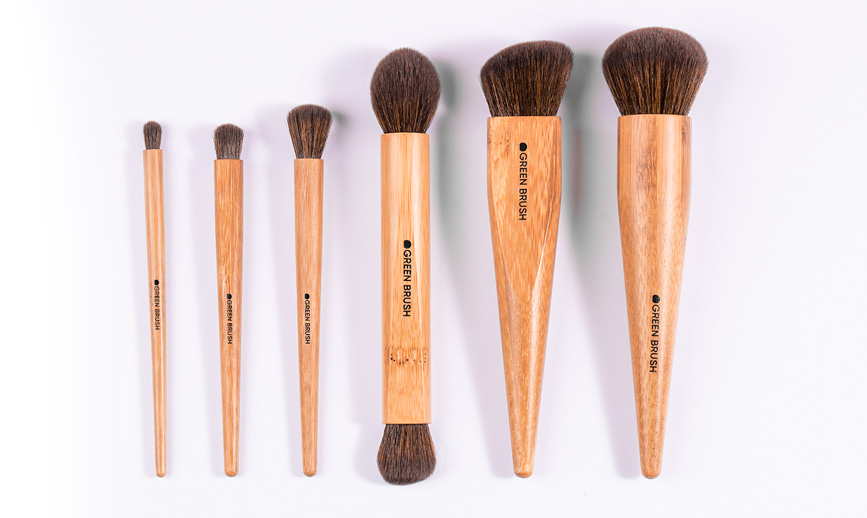
Depending on the product concept, options may include wood, plastic, aluminum, and other suitable materials. Each offers different possibilities for weight, shape, surface finish, decoration, and manufacturing.
For example, a lightweight handle may be appropriate for a travel-oriented collection, while a more substantial handle may support the intended feel of a premium product.
Custom colors, coatings, printing, and special shapes can further differentiate the collection. However, brands should assess the additional development work and production requirements associated with each feature.
The ferrule connects the brush head to the handle and contributes to the overall appearance of the brush.
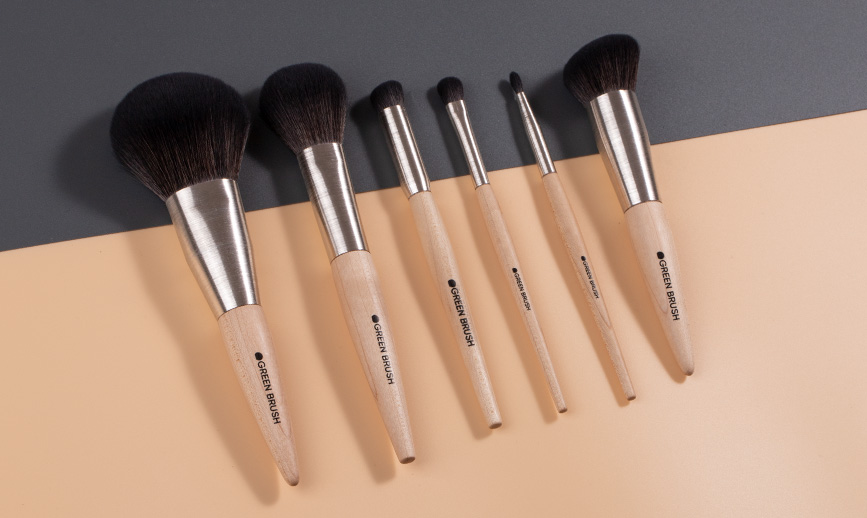
Its material, dimensions, finish, and assembly requirements should be considered together. A coordinated metallic finish can enhance a premium design, but the chosen specification must also be practical for manufacturing and suitable for the intended use.
The best material strategy is one that supports product performance, brand positioning, and production consistency rather than maximizing the specification of every component.
Customization is one of the most effective ways for a beauty brand to establish a recognizable product identity. However, not every component needs to be completely original.
A more efficient strategy is to identify the features that contribute most to differentiation and concentrate development resources there.
Brush-head geometry can influence application precision, coverage, blending, and overall usability.
A distinctive brush shape may be worthwhile when it addresses a specific makeup application need or creates a meaningful difference from existing products.
For less specialized brush types, adapting an established design may provide a practical starting point, subject to suitability and any applicable intellectual property considerations.
The handle is often one of the most visible opportunities for brand differentiation.
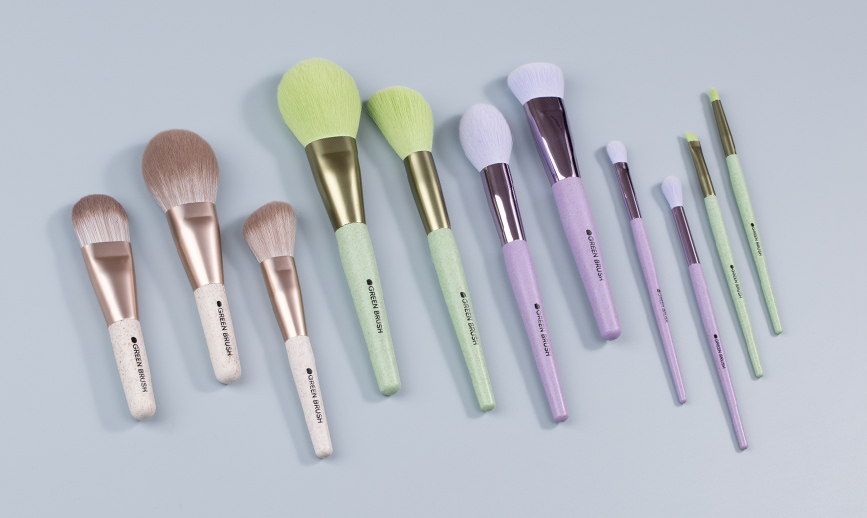
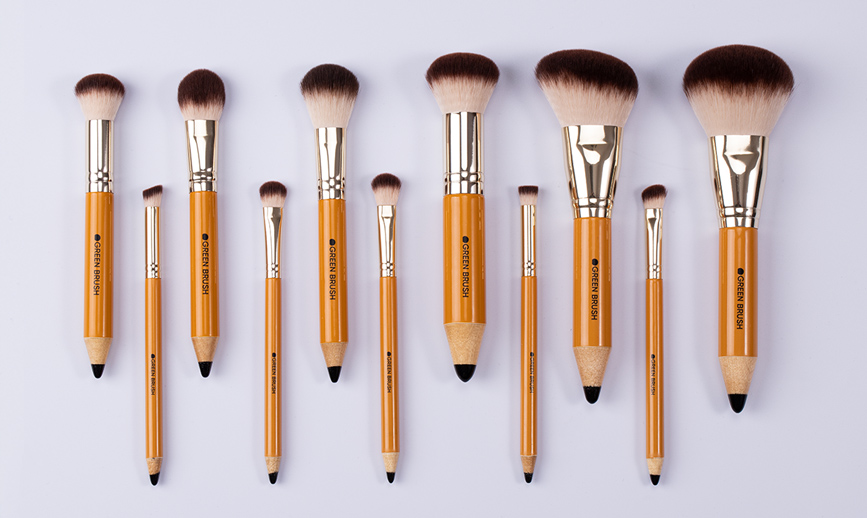
A distinctive silhouette, carefully selected color, coordinated finish, or recognizable logo placement can help unify a product collection.
Before developing an entirely new handle structure, brands should assess whether existing designs can be adapted to achieve the desired visual effect.
New tooling may be justified when the design provides substantial brand value, but the decision should account for development costs, expected order quantities, and future product plans.
Logo application, metallic details, color coordination, and surface treatments can significantly influence the perceived quality of a brush.
These features should be selected as part of a coordinated design system rather than as isolated upgrades.
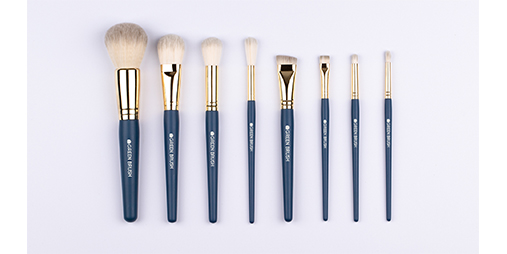
For example, a consistent handle color and ferrule finish across several brush styles can create a cohesive collection without requiring every product to have a completely different construction.
The goal is to make the collection recognizable while keeping its design and manufacturing requirements manageable.
One of the most effective ways to balance customization and cost is to plan the entire brush collection before finalizing individual SKUs.
A collection may include face brushes, eye brushes, detail brushes, and coordinated sets. Developing every item independently can introduce unnecessary differences in components, finishes, and packaging.
Instead, consider which elements can be standardized across the range.
For example, several brush styles may share a handle design, color palette, logo treatment, or packaging format while using different brush heads for their intended functions.
This approach can provide several advantages:
A more consistent brand identity.
Fewer unnecessary component variations.
Easier product specification and approval.
More efficient coordination across multiple SKUs.
Greater flexibility when extending the collection.
Standardization does not mean sacrificing customization. It means establishing a common design language and reserving unique features for products that genuinely need them.
For brands developing a new collection, a focused initial assortment may also provide a practical way to validate the concept before expanding into additional styles and configurations.
The cost of a custom makeup brush is influenced by more than its basic materials.
The overall project may involve product development, sampling, tooling, component sourcing, branding, assembly, quality inspection, and packaging. Each requirement should be considered when evaluating a quotation.
New handle structures, specialized molds, or other custom components may involve upfront development costs.
These investments can be worthwhile when they create meaningful product differentiation or support a longer-term collection strategy.
However, if the projected order quantity is limited, adapting a suitable existing component may be more commercially practical.
Introducing multiple handle colors, ferrule finishes, fiber specifications, or decorative treatments can increase coordination requirements.
A collection with many unique components may be more complex to plan and manufacture than one built around a consistent component platform.
Brands should therefore distinguish between customization that improves the product and customization that adds complexity without a clear commercial benefit.
Order quantity can affect how development costs, component purchases, and production setup expenses are distributed across units.
The exact impact depends on the manufacturer, materials, tooling, and project specifications.
Rather than assuming that a larger order is always the best solution, brands should compare realistic order scenarios and consider inventory exposure, cash flow, and expected demand.
A suitable manufacturing partner can help evaluate available options based on the actual project rather than relying on a generic cost formula.
A low quoted unit price may not represent the lowest overall cost for a premium brush program.
The complete commercial picture may include development expenses, tooling, packaging, inspection, freight, inventory, and the consequences of quality problems or delayed launches.
For example, a lower-cost specification may initially appear attractive but require additional sampling, more complicated assembly, or changes after the first production run.
Likewise, a more expensive component may not create enough customer-perceived value to justify its additional cost.
To compare options effectively, brands should review:
Unit pricing at realistic order quantities.
One-time tooling or development charges.
Sample and revision requirements.
Packaging and branding costs.
Quality inspection arrangements.
Production lead times and order scheduling.
Shipping, duties, and other applicable landed costs.
Inventory commitments and expected reorder frequency.
The purpose is to understand the complete investment required to bring the product to market.
When comparing quotations, ensure that suppliers are pricing equivalent specifications. Otherwise, an apparent price advantage may simply reflect differences in materials, construction, packaging, or quality expectations.
Quality should be defined during product development rather than left to subjective judgment at the end of production.
Terms such as soft, durable, premium, and well-finished can mean different things to different stakeholders. These expectations should be translated into product-specific requirements that can be evaluated.
For makeup brushes, relevant inspection criteria may include:
Brush-head shape, dimensions, and density.
Fiber shedding and shape retention.
Handle dimensions, color, and surface finish.
Ferrule alignment and assembly.
Logo placement and print quality.
Cleanliness and overall appearance.
Packaging condition and product presentation.
Functional testing should reflect the intended brush application and use conditions. Visual inspection alone may not be sufficient to evaluate performance.
Before bulk production, the brand and manufacturer should agree on the approved sample, final specifications, inspection methods, and acceptance criteria.
For repeat orders, retaining the approved sample and its associated documentation provides a useful reference for checking consistency.
A clearly defined quality standard helps prevent unnecessary disputes and reduces the risk of discovering mismatched expectations after production has begun.
Sampling provides an opportunity to evaluate the relationship between design, performance, and cost before committing to a larger production run.
An organized sample review should address several questions.
Does the product perform as intended?
Evaluate the brush according to its intended application, including relevant aspects of softness, product pickup, blending, precision, and ease of use.
Does the product reflect the brand identity?
Check the handle design, color, finish, logo, and packaging against the approved direction.
Is the specification commercially practical?
Review whether the selected materials, components, and decorative features align with the project's target cost and production requirements.
Can the approved product be reproduced consistently?
Discuss the specifications and quality controls required for bulk production and future reorders.
When changes are necessary, prioritize them according to importance. Correcting a functional issue or a significant branding inconsistency should generally take precedence over a minor cosmetic preference.
Consolidating feedback from product development, purchasing, marketing, and quality teams can also reduce unnecessary revision cycles.
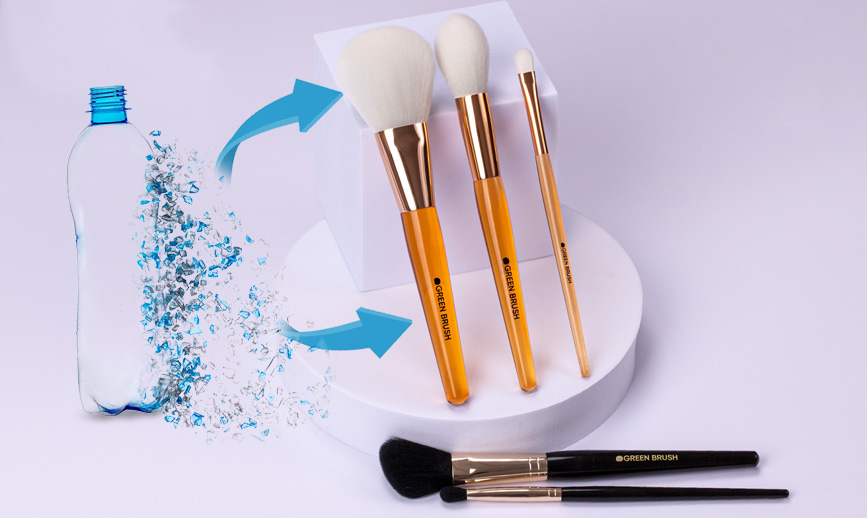
For brands selling internationally, material and packaging decisions may also involve sustainability expectations, sourcing documentation, and destination-market requirements.
These considerations should be addressed during product development rather than introduced after the design has been finalized.
Depending on the target market and product specification, brands may need to review applicable requirements concerning materials, packaging, labeling, and product safety.
Sustainability claims should be supported by appropriate evidence. Terms such as recyclable, biodegradable, or environmentally friendly should not be used without confirming that they accurately describe the relevant material and product conditions.
Brands should also consider whether a proposed material change affects durability, appearance, production methods, or the intended user experience.
A well-planned approach allows commercial, technical, and market requirements to be considered together.
Balancing customization, quality, and cost requires collaboration between the brand and its manufacturing partner.
An effective partner should be able to discuss not only whether a requested design can be produced, but also how material selection, component design, production requirements, and order quantities may affect the overall project.
For premium beauty brands, this collaboration is especially valuable when developing multiple SKUs, coordinating custom finishes, or planning future product extensions.
At GREEN BRUSH, custom OEM/ODM makeup brush development can cover brush shapes and sizes, fiber options, handle designs, ferrule finishes, logo application, and packaging.
The appropriate solution depends on each client's product concept, target market, quality expectations, and commercial requirements.
Rather than applying the same specification to every project, the objective is to identify a combination of features that delivers the desired product experience while remaining practical to manufacture.
A successful premium makeup brush collection does not necessarily require the most expensive materials, the greatest number of custom components, or the most elaborate packaging.
It requires a clear understanding of what customers value, which features define the brand, and how the product can be manufactured consistently at a commercially sustainable cost.
By prioritizing meaningful customization, planning collections around shared components, evaluating total project costs, and establishing quality standards before production, beauty brands can make more informed development decisions.
The result is a collection that reflects the brand's identity, meets its performance expectations, and supports long-term product development.
Planning a premium custom makeup brush collection?
Share your product concept, preferred materials, design references, target order quantity, and packaging requirements with GREEN BRUSH. Our team can work with you to explore customization options and develop a solution aligned with your product and business goals.
Leave a Message