+86 198 0337 5938
+86 198 0337 5938
Dec. 30, 2025
As makeup users become more ingredient- and tool-conscious, one question is being asked more frequently than ever: how can you tell if a brush is high quality?
A high-quality makeup brush not only improves makeup application but also protects skin health, enhances product performance, and lasts significantly longer.
In this article, we break down the key indicators professionals and informed consumers use to identify a high-quality makeup brush, helping you make smarter, more confident choices.
A makeup brush directly touches the skin every day. Low-quality brushes can cause:
Uneven makeup application
Excessive product waste
Skin irritation or micro-scratches
Shedding and short product lifespan
Understanding how to tell if a brush is high quality is essential for both everyday users and beauty professionals.
Look at the Fiber Material
One of the first ways to tell if a brush is high quality is by examining its bristles.
High-quality brushes typically feature:
Soft, uniform fibers
Smooth tips rather than sharp-cut ends
Even density across the brush head
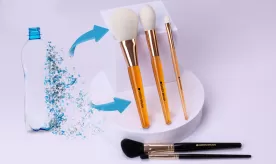
Premium synthetic fibers are especially valued today because they are consistent, skin-friendly, and easy to maintain.
Test the Softness and Recovery
Gently press the brush against your hand and release it:
A high-quality brush will spring back into shape
Bristles should not feel scratchy or stiff
No fibers should fall out during light pressure
Shedding at this stage is a clear sign of poor construction.
Density plays a major role in performance.
Too sparse → streaky application
Too dense → heavy, uneven product buildup
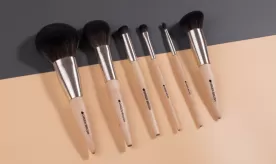
A high-quality makeup brush has balanced density and a well-defined shape that stays consistent over time. The brush head should look symmetrical, not uneven or frayed.
The ferrule (the metal part connecting bristles to the handle) reveals a lot about brush quality.
High-quality brush ferrules are:
Seamless or tightly crimped
Smoothly finished with no sharp edges
Firmly attached with no wobbling
Loose ferrules are a common cause of shedding and breakage.
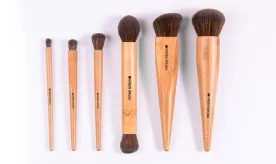
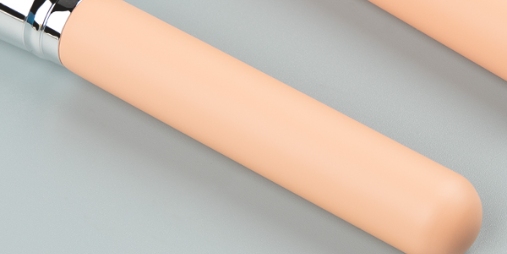
To tell if a brush is high quality, do not ignore the handle.
Key signs of quality include:
Comfortable grip and proper weight balance
Smooth coating with no cracking or peeling
Durable materials that resist moisture damage
A well-balanced handle improves control and reduces hand fatigue during application.
A high-quality makeup brush should:
Pick up product evenly
Release product smoothly onto the skin
Blend without dragging or patchiness
If a brush requires excessive pressure to work, it is likely not well made.
Another practical way to tell if a brush is high quality is how it behaves during washing.
High-quality brushes:
Maintain shape after repeated washing
Dry evenly without stiffness
Do not shed excessively after cleaning
Low-quality brushes often lose their form or become rough after just a few washes.
While price alone does not define quality, extremely cheap brushes often compromise on materials and craftsmanship.
A high-quality brush:
Lasts months or years with proper care
Performs consistently over time
Offers better long-term value despite higher upfront cost
When evaluating quality, consider cost per use, not just purchase price.
Many users misjudge brush quality by focusing only on:
Appearance or color
Brand name alone
Initial softness without testing durability
Knowing how to tell if a brush is high quality requires looking at construction, performance, and longevity together.
Soft, uniform bristles with no sharp tips
Minimal to no shedding
Secure ferrule with clean finishing
Balanced, durable handle
Smooth, even makeup application
Maintains shape after washing
If a brush meets most of these criteria, it is very likely a high-quality makeup brush.
Understanding how you can tell if a brush is high quality empowers you to make better choices for your skin, your makeup results, and your long-term routine.
Whether you are a professional makeup artist or an everyday user, investing in well-made brushes leads to better performance, improved hygiene, and a more comfortable makeup experience.
Leave a Message