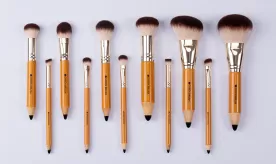
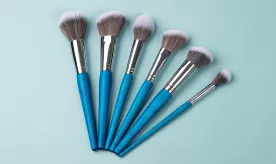
+86 198 0337 5938
+86 198 0337 5938
Dec. 23, 2025
Building a private label makeup brush line may seem like simply creating "brushes + packaging," but the real cost structure stems from a complete product system: how you define the product, select materials, determine process standards, control quality consistency, and ensure stable delivery and scalable repeat purchases.
Compared to other cosmetics, makeup brushes have advantages such as longer product lifecycles, lower formulation risks, and greater potential for repeat purchases and set customization. However, precisely because they are "tool-type products," consumers' judgments based on experience are often more direct—brush feel, powder pickup, durability, shedding rate, and overall appearance all influence your ability to build a reputation and command a premium.
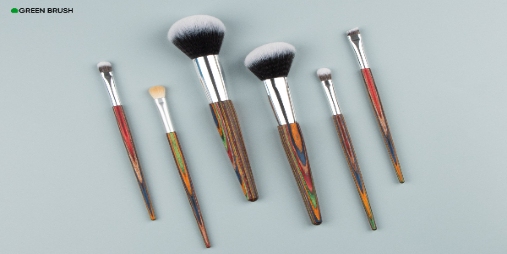
Before starting production, you must first determine that you're not making "a few brushes," but rather a product structure that the market can understand: Is it a single best-selling item, or a gift set? Is it entry-level for mass production, or a mid-to-high-end quality strategy? Is it primarily face brushes, or more specialized eye brushes?
SKU structure directly impacts all subsequent costs:
The more SKUs, the greater the workload for sampling, confirmation, quality inspection, and inventory management.
The more complex the brush designs, the higher the requirements for assembly consistency and shaping precision.
Settings significantly increase management costs for packaging, volume transportation, and defect tolerance, but they can also increase the average order value and gift-like appeal.
A more prudent approach is usually: don't aim for full coverage of brush types in the first batch, but rather create a set that is "instantly understandable to users" around the most commonly used core scenarios, leaving room for future expansion.
The bristles determine the feel on the skin, powder pickup, blending control, ease of cleaning, and durability, making them a core source of cost differences in makeup brushes. The mainstream choices generally fall into two categories: synthetic bristles and animal hair.
Synthetic bristles are increasingly used in the current market for clear reasons: batch stability, high controllability, easy cleaning, compatibility with cream and lotion products, and better alignment with vegan consumer trends. For most new brands, high-quality synthetic bristles make it easier to maintain consistent quality and are more suitable for large-scale replication.
Animal hair is more often associated with the "traditional high-end powder makeup experience," and while it may indeed have advantages in powder adhesion and a finer finish, it also means a more complex supply chain and stricter quality consistency management, including batch variations, odor and cleaning/maintenance experiences, and brand risks arising from changing consumer preferences.
If you want to invest in areas that are "perceptible to users and can be delivered consistently," prioritizing the stability of the bristles is the most effective investment.
The differences in many makeup brushes don't lie in the bristles, but rather in seemingly insignificant components like the handle and metal tube.
The handle material (wood, aluminum, plastic, etc.) determines the grip, weight, center of gravity, and overall appearance; the surface treatment (spraying, matte, electroplating, baking paint, etc.) determines wear resistance and the risk of paint chipping. The metal tube (ferrule) determines the stability of the bristles, and the quality of the clamping point and the gluing process directly affect issues like bristle shedding, loosening, and deformation.
When targeting the mid-to-high-end market, the handle and metal tube are often the parts that most significantly enhance the "first impression"; when targeting a high-volume market, structural stability and durability take precedence. Regardless of the market positioning, ensuring consistent assembly and basic standards of water and wash resistance is crucial; otherwise, returns and negative reviews will quickly erode profits.
Makeup brushes are a classic example of products where "details determine fate." Cost is reflected not only in materials but also, and perhaps more importantly, in process control and adherence to quality standards.
Key factors affecting user experience and after-sales service typically include:
Inconsistent bristle shaping (affects application boundaries and blending feel)
Firm bristle attachment (affects shedding and lifespan)
Symmetrical metal tube clamps (affects deformation and loosening)
Stable surface finish (affects paint chipping, scratches, and visual texture)
Most importantly, "stability" is crucial. Consumers generally have a lower tolerance for makeup brushes than for many everyday items: problems like shedding, scratching, crooked brush heads, or paint chipping on the handle are often immediately interpreted as "cheap." Therefore, instead of blindly pursuing more brush types, it's better to first establish enforceable quality standards and a random inspection mechanism to ensure consistency across every batch.
Makeup brushes are tool-type products, and consumers rarely judge differences based on specifications before use. Packaging plays a stronger role in shaping "experience expectations": it affects not only conversion rates but also your ability to establish brand premium.
Different packaging strategies correspond to different cost structures:
Single brush: More suitable for blockbuster strategies and rapid iteration; packaging can be lightweight but must be clean and professional.
Set boxes: More suitable for gifting and increasing average order value, but more sensitive to volume during transport, protective structure, and control of appearance defects.
Storage bags/brush holders: Emphasize scenario value, significantly enhancing "practicality" and brand memorability.
If the budget is limited, it's recommended to invest in areas where "users are most perceptible": a unified visual system, a reasonable storage experience, and protective structures during transport. Overly complex box designs may not bring higher premiums but could increase breakage rates and cost uncertainty.
Makeup brushes generally don't require formula registration like color cosmetics, but this doesn't mean compliance and documentation can be ignored. Especially when entering stricter platforms or channels, support such as material specifications, origin information, labeling standards, and traceability documents are often required.
A more mature approach is to incorporate "document traceability" into supply chain requirements from the first batch of products—this significantly reduces resistance when expanding channels, upgrading the brand, or facing platform audits later.
The logistics costs of makeup brushes are often underestimated for three reasons:
The brush head needs to be protected to maintain its shape, increasing packaging volume.
Larger sets are more sensitive to shipping costs.
Appearance defects are a concern; even minor dents or scratches can lead to returns.
Therefore, packaging design must consider both transport protection and stacking resilience. Many seemingly cost-effective lightweight packages ultimately result in higher breakage rates, return rates, and after-sales costs.
Truly effective cost control isn't about minimizing every step, but about creating a closed loop where all choices revolve around the same positioning:
Entry-level, high-volume approach: Primarily synthetic bristles, standard brush shapes, simplified packaging, rapid iteration, and stable supply.
Mid-to-high-end, quality-focused approach: Higher bristle consistency, stricter QC, more consistent surface finishes, and a more complete set experience.
Professional approach: Clear brush shape system, explicit functional expression, emphasis on usage scenarios and professional content integration.
When the brush experience, packaging presentation, price range, and channel positioning are consistent, your cost investment can translate into brand compounding profits; conversely, inconsistent structures lead to "spending money but users not perceiving it," with gross profit being devoured by after-sales service and negative reviews.
What you need to build is not a "cost list," but a sustainable profit structure.
The essence of creating a private label makeup brush line is building a sustainable product line: Stable delivery, consistent quality, perceptible experience, repeat purchases from the brand, and replicable new product launches.
Once you've clearly outlined the priorities and trade-offs based on the above sections, you'll be able to more accurately determine where to allocate your budget: brush bristles and craftsmanship determine reputation, structure and quality control determine stability, packaging and presentation determine conversion rates and premium pricing, and supply chain and delivery determine long-term expansion capabilities.
Leave a Message