+86 198 0337 5938
+86 198 0337 5938
Mar. 25, 2026
The United States remains one of the most mature and influential markets for cosmetic tools. With the rapid development of beauty brands, professional makeup artistry, and social media–driven beauty culture, the demand for high-performance makeup brushes continues to expand.
In recent years, American consumers have shifted their focus from basic makeup accessories to professional-grade application tools that improve product performance and enhance makeup precision. By 2026, several key trends are shaping the evolution of the U.S. makeup brush market, influencing brush design, materials, and manufacturing technologies.
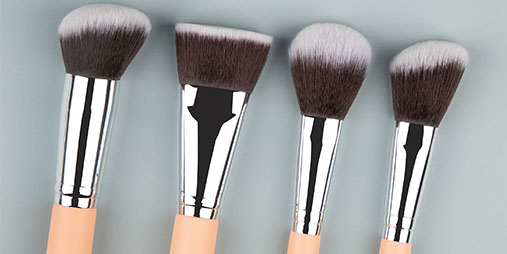
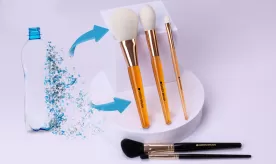
One of the most significant changes in the U.S. makeup brush market is the widespread transition from natural animal hair to advanced synthetic fibers.
Modern synthetic bristles are engineered to replicate the softness and product pickup ability of natural hair while offering additional advantages such as:
improved durability
easier cleaning and maintenance
compatibility with liquid, cream, and powder cosmetics
consistent fiber structure for stable product performance
For cosmetic brands, synthetic fibers also support cruelty-free and vegan product positioning, which has become increasingly important to American consumers.
Manufacturers are investing in fiber engineering technologies to create ultra-fine tapered filaments, micro-textured surfaces, and multi-layer fiber structures that improve pigment distribution and blending performance.
Makeup styles in the U.S. beauty market continue to evolve, requiring more specialized brush geometries.
Contemporary makeup techniques often emphasize seamless blending, soft gradients, and detailed contouring, which require brushes designed with specific shapes and densities.
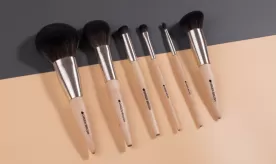
Common design developments include:
tapered blending brushes for controlled pigment diffusion
angled face brushes for sculpting cheekbones and jawlines
flat buffing brushes for foundation blending
small precision brushes for concealer and detailed eye work
Advanced brush shaping processes and CNC trimming technologies allow manufacturers to maintain tight dimensional consistency, which is essential for professional makeup applications.
Hygiene has become a major consideration in cosmetic tool selection. In the United States, consumers are more aware of bacterial buildup and skin health issues related to poorly maintained makeup tools.
As a result, many brush manufacturers are optimizing brush structures to support easier cleaning and faster drying. Key improvements include:
low-absorption synthetic fibers
dense yet breathable bristle configurations
corrosion-resistant ferrules
durable adhesives that withstand frequent washing
These technical improvements help extend brush lifespan and maintain stable application performance over time.
Another trend in the U.S. market is the increasing popularity of professional-style brush collections designed for advanced makeup users.
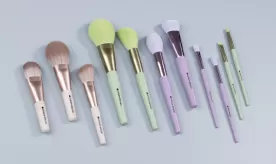
While basic brush sets remain popular for beginners, many beauty enthusiasts now prefer more specialized kits that include brushes dedicated to different stages of makeup application, such as:
base makeup brushes
contour and sculpting brushes
eye blending and shading brushes
detail brushes for precision work
This trend reflects the growing influence of professional makeup artistry and online beauty education platforms, where detailed application techniques are widely shared.
In addition to performance, American consumers and beauty brands are paying closer attention to material quality and product aesthetics.
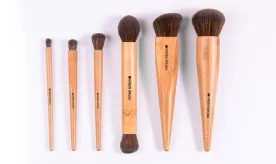
Premium brush construction typically includes:
anodized aluminum or brass ferrules
hardwood or engineered handles
ergonomic grip design
customized surface finishing
Private label and brand customization are also expanding rapidly in the U.S. market. Beauty brands increasingly seek manufacturers capable of providing OEM and ODM brush development, including custom fiber selection, handle design, branding, and packaging solutions.
The performance of a makeup brush depends heavily on manufacturing precision. High-quality brushes require strict control over multiple production stages, including fiber selection, tufting density, ferrule forming, handle finishing, and final assembly.
Professional brush manufacturers invest in advanced production equipment and experienced craftsmanship to ensure consistent brush shape, durability, and application performance.
For cosmetic brands looking to develop professional makeup tools, working with an experienced brush manufacturer is essential. Companies such as Green Brush specialize in the design and production of a wide range of cosmetic brushes, including face brushes, eye brushes, and customized brush sets for beauty brands and private label projects.
Leave a Message